Choosing between PET and TPU heat shrink for catheter assembly
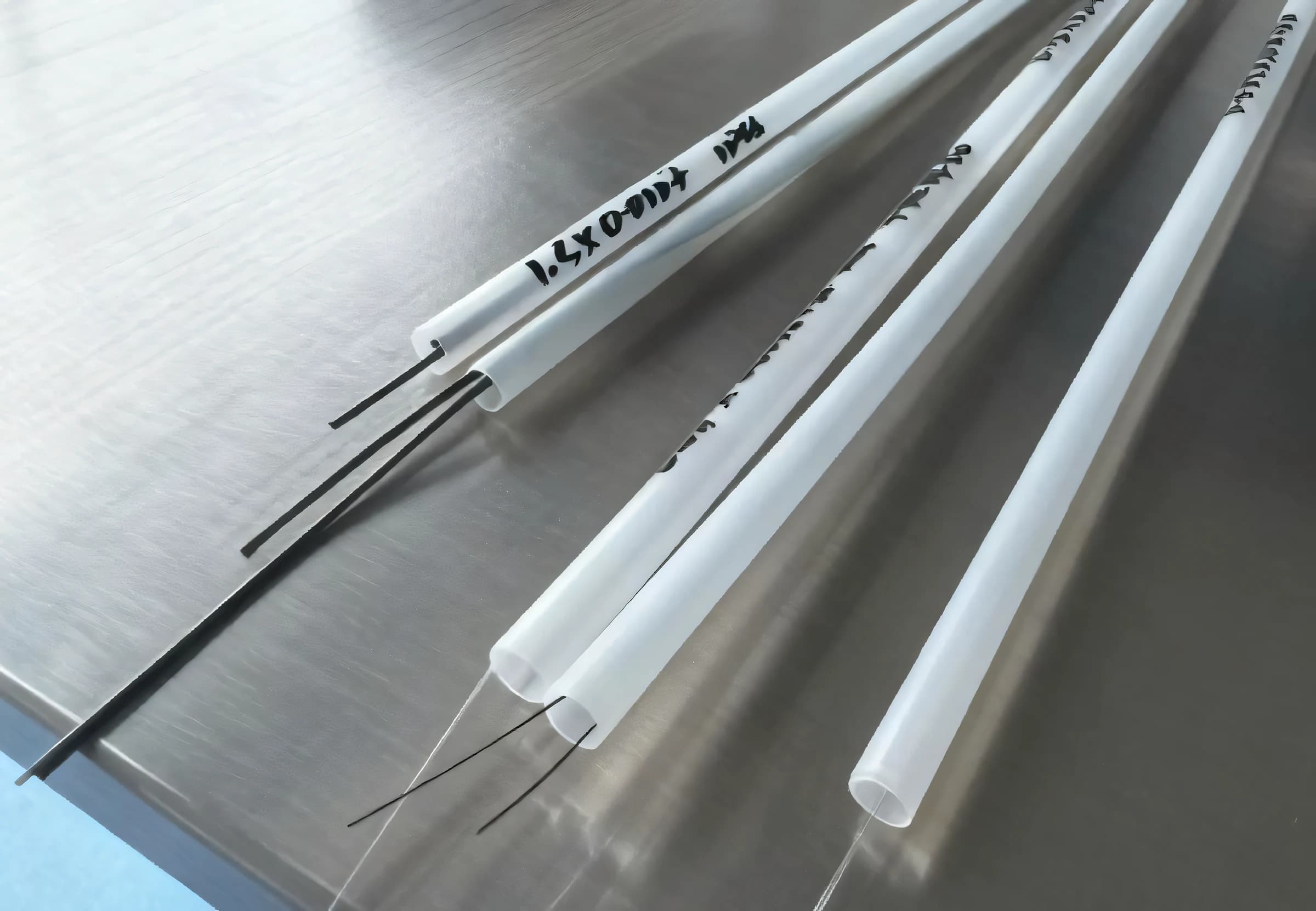
Heat shrink tubing shows up twice in catheter manufacturing: as a permanent layer on the finished device, and as a sacrificial tool that compresses a lay-up during reflow and is then peeled away. PET and TPU sit at opposite ends of that range.
PET: thin, stiff, dimensionally precise
PET heat shrink is chosen when the wall has to be as thin as possible and hold its dimensions. Processable wall runs from 0.0025mm to 0.05mm, with outer diameters from 0.25mm to 8mm and shrink ratios of 1.3:1 and 1.6:1 — plus a non-shrink grade where you want the thin wall without the recovery.
It starts to shrink at around 100°C and needs 210°C for full recovery, with a working range of -55°C to 200°C. That wide gap between onset and full recovery is useful: it gives you a window to position the tube before it locks down.
PET is also physiologically inert with good dielectric properties, and complies with ISO 10993-1 and RoHS while accepting both ethylene oxide and gamma sterilisation.
TPU: soft, resilient, forgiving
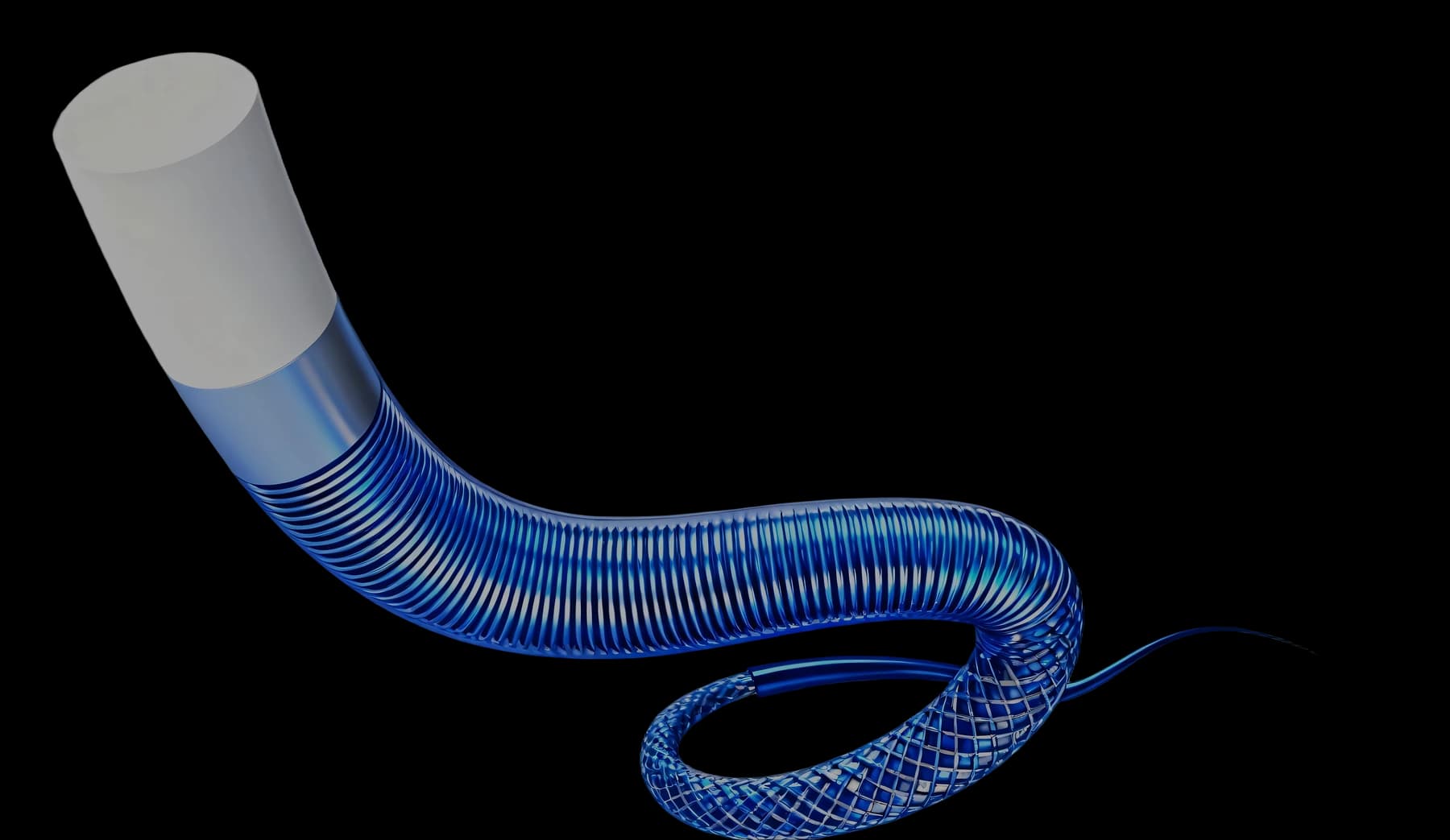
Ultra-soft TPU goes the other way. It is used as the outer layer at the distal end of neurovascular catheters, where the point is not dimensional precision but reducing trauma to the vessel wall. The low durometer lets the tip conform rather than push.
Ultra-soft TPU also has naturally low extrusion viscosity, which makes it easier to process into very thin outer layers, and it is easy to sleeve over an assembly while keeping good resilience and biocompatibility.
Choosing between them
If the tube stays on the device and its job is insulation, a thin protective skin, or holding a bundle together with minimum added diameter, PET is usually right. If the tube stays on the device at the distal end and its job is to be soft against tissue, TPU is right. If the tube is sacrificial — used to compress a reflow and then removed — the choice is driven by recovery force and peel behaviour rather than by the finished-device requirements at all.
In practice the decision is rarely made on the tube alone. Tell us the assembly it goes into and the sterilisation route, and the shortlist usually reduces to one.