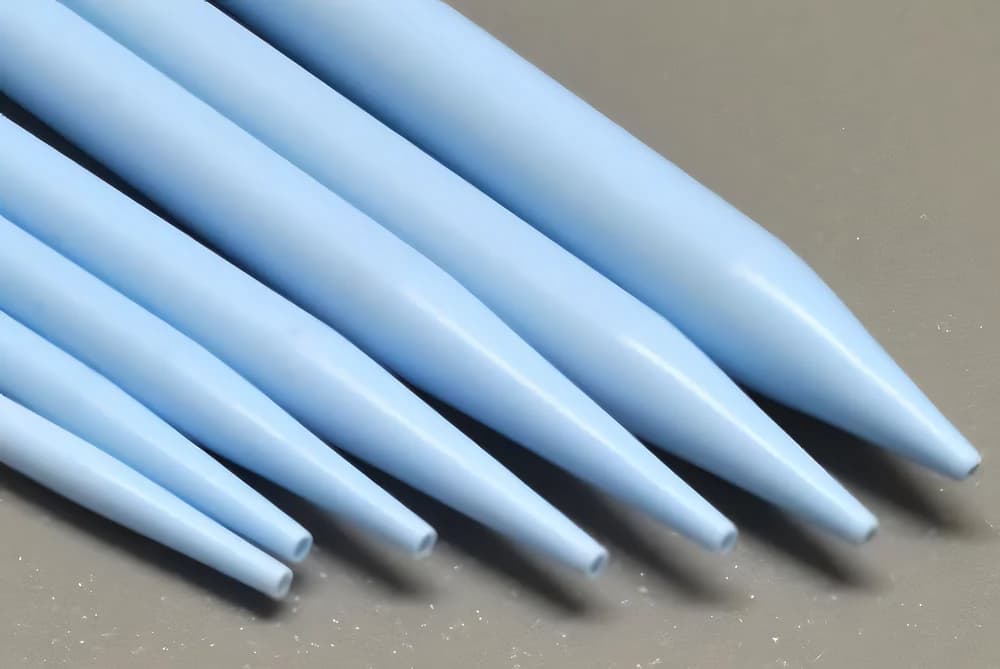
The tip is the first thing that touches tissue. Tipping reshapes the distal end into an atraumatic profile and, where required, closes the transition between an inner liner, a braid or coil layer and the outer jacket so there is no step for tissue or a guidewire to catch on.
Tip geometries
- Tapered and radiused atraumatic tips
- Guidewire-compatible tapers matched to a target wire diameter
- Soft distal sections formed from a lower-durometer outer layer
Process notes
- Tip length, taper angle and wall transition set from the drawing
- Inner lumen supported during forming so the tip does not neck down
- Reinforcement layers terminated and encapsulated so no braid ends are exposed
Typically combined with
Ultra-soft TPU or Pebax outer layers on the distal section — the same approach used on neurovascular catheters, where a softer tip reduces trauma to the vessel wall.