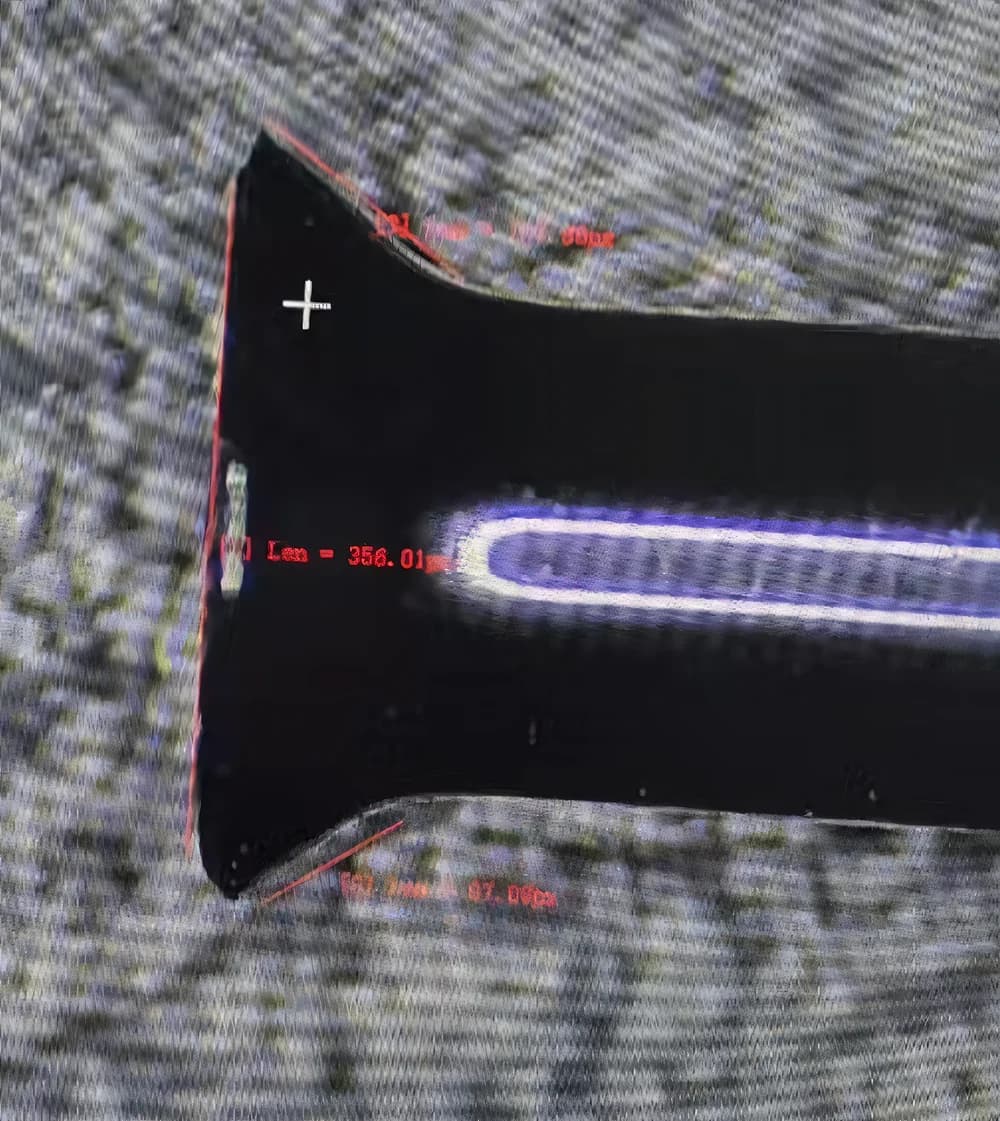
Flaring opens the tube end into a funnel or bell so a mating part can be seated and bonded reliably. It is a small feature that decides whether a downstream joint leaks, and it is far more repeatable than trying to force a straight-cut tube onto a fitting.
Where it is used
- Tube-to-hub and tube-to-connector joints
- Lead-ins that let an inner member be threaded through without shaving the lumen
- Seats for bonded or welded assemblies
Process notes
- Flare angle and depth matched to the mating component
- Formed rather than cut, so wall thickness is redistributed instead of removed
- Burr-free finish — nothing to shed into the fluid path
Typically combined with
Hole punching and insert molding as part of a single finishing sequence on the same shaft.